
 Dr. Haitham Ahmed
Parents ask me a lot of medical questions. But the one I get most often - more than questions about vaccines, sleep schedules, or developmental milestones - is this: what should I be feeding my toddler?
It's a reasonable question to bring to a physician. But it's also a question that has been so thoroughly colonized by influencers, wellness brands, and conflicting advice that most parents are more confused about toddler nutrition than they were before they started researching it.
So here is my honest, physician-informed answer - not what the internet says, but what I actually feed my own children and why. I'll also share why understanding the digestive system changed the way our entire family thinks about food.
First: Why the Digestive System Matters More Than the Diet
Most nutrition advice focuses on what to eat. I want to start with something more fundamental: understanding where food actually goes and what it does when it gets there.
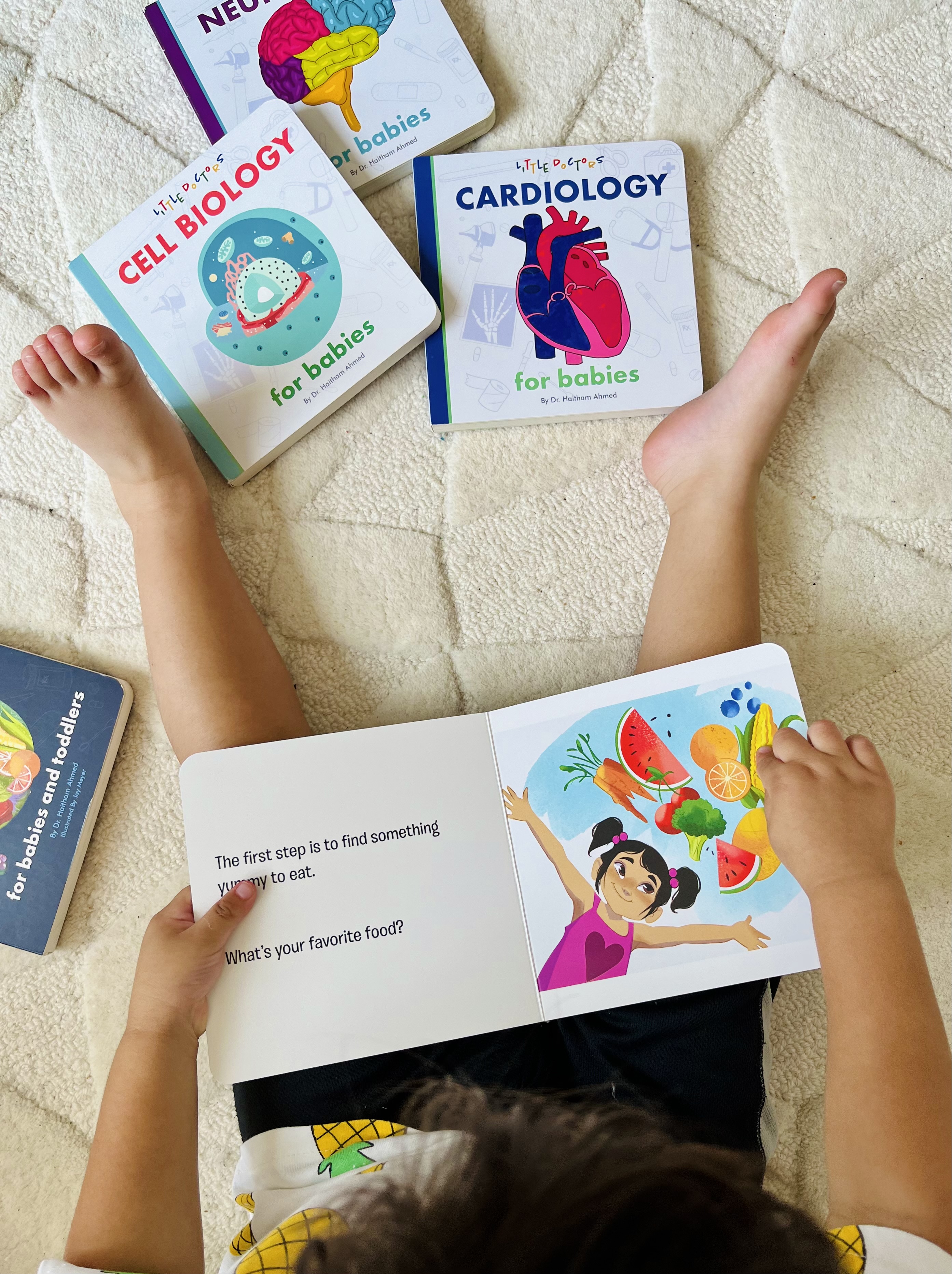
When my children were toddlers, we read our Digestive System book together regularly. Not because I was trying to teach them biology - but because it sparked conversations I wasn't expecting. My toddler started asking why certain foods made their tummy feel good and others didn't. They started noticing how their body responded to what they ate. They became, in the truest sense, curious about food rather than just picky about it.
That shift - from food as something imposed on a child to food as something a child is genuinely curious about - is worth more than any specific dietary recommendation I could give you. A curious eater is a good eater. And curiosity starts with understanding.
The insight: Children who understand what their digestive system does - even at a basic level - are more likely to make thoughtful food choices. Not because they're calculating nutrition, but because the body becomes something interesting rather than something to fight over at the dinner table.
What I Actually Feed My Toddler
Here are the foods that appear most consistently in our household - and the reasons behind each one from a physician's perspective.
Blueberries
If I had to pick one food that I'm most consistent about giving my toddler, it's blueberries. They're one of the most antioxidant-rich foods on the planet, they support brain development through flavonoids that cross the blood-brain barrier, and most toddlers eat them without complaint. Fresh or frozen - both are equally nutritious. We add them to yogurt, oatmeal, or serve them as a standalone snack.
Eggs
Eggs are one of the most complete nutritional packages in existence - high-quality protein, healthy fats, choline (which is critical for brain development and memory), vitamin D, and B12. Scrambled, boiled, or made into a simple omelette with vegetables hidden inside, eggs appear in our household almost every morning. The choline content alone makes them a non-negotiable for us during the toddler years.
Salmon
Omega-3 fatty acids - particularly DHA - are the primary structural fat in the brain and retina. The toddler years are a critical window for brain development, and DHA plays a direct role in building the neural connections that support learning, language, and attention. We aim for salmon twice a week. Mild-flavored, easy to prepare, and almost universally accepted by toddlers when served with a dipping sauce they enjoy.
Broccoli
I know. Every toddler nutrition list includes broccoli and every parent rolls their eyes. But the reason it's on every list is that it genuinely belongs there. Broccoli is extraordinarily nutrient-dense - high in vitamin C, vitamin K, folate, and fiber - and the fiber specifically feeds the beneficial bacteria in the gut microbiome, which has downstream effects on immunity, mood, and digestion. We roast it with olive oil until it gets slightly crispy at the edges, which makes it dramatically more palatable to young children than steamed broccoli.
Lentils and Legumes
Plant-based protein, iron, and fiber in one package. Iron deficiency is the most common nutritional deficiency in toddlers worldwide and has direct effects on cognitive development and attention. Lentils are one of the best non-meat sources of iron available. We add them to soups, blend them into tomato sauces, or serve them as a simple side dish. Paired with vitamin C (like a squeeze of lemon) the iron absorption increases significantly.
Avocado
Healthy monounsaturated fats are essential for brain myelination - the process of insulating nerve fibers that allows signals to travel faster and more efficiently through the brain. This process is particularly active during the toddler years. Avocado is also high in potassium, folate, and vitamin E. We serve it sliced, mashed on toast, or blended into smoothies. It's one of the few foods that provides both healthy fat and meaningful micronutrients in a form toddlers typically enjoy.
Full-Fat Dairy
The low-fat dietary guidelines that apply to adults do not apply to toddlers. Children under 2 need dietary fat for brain development - the AAP recommends whole milk and full-fat dairy products for children 12–24 months for this reason. We use full-fat yogurt, whole milk, and full-fat cheese without concern. The calcium and vitamin D support bone development; the fat supports the brain. This is one area where the adult dietary rules are actually counterproductive when applied to young children.
What I Limit - And Why
The positive list matters. But so does what we consciously reduce:
- Added sugar. The WHO recommends that children under 2 consume no added sugar at all, and that older toddlers keep it minimal. This isn't about deprivation - it's about taste calibration. A toddler who isn't habituated to high sugar levels finds naturally sweet foods like fruit genuinely satisfying. One who is conditioned to processed sugar finds fruit bland by comparison. We protect their palate by keeping added sugar low in the early years.
- Ultra-processed foods. The research on ultra-processed food and health outcomes is increasingly clear and increasingly alarming. We're not perfectly clean eaters - that's neither realistic nor necessary. But we treat ultra-processed foods as occasional rather than regular, and we try to keep them out of the default rotation.
- Soda and sugar-sweetened beverages. This is a firm line in our household. A single can of soda contains more added sugar than a toddler should consume in several days - delivered in liquid form, which means it hits the bloodstream almost immediately with no fiber to slow it down. Beyond the sugar, the phosphoric acid in colas interferes with calcium absorption at a stage when bones are actively mineralizing. The artificial dyes, preservatives, and caffeine in many sodas have no place in a young child's diet. As a cardiologist I'm acutely aware that the habits formed in toddlerhood around sweetened beverages track directly into adult consumption patterns - and adult cardiovascular risk. We offer water and whole milk. That's it.
- Juice. Even 100% fruit juice delivers sugar without fiber, which means a blood sugar spike without the nutritional ballast. We offer whole fruit instead.
- Excessive sodium. Many toddler-marketed foods are surprisingly high in sodium. Toddler kidneys are still developing and handle sodium less efficiently than adult kidneys. We read labels and choose lower-sodium options where possible.
The Dinner Table Philosophy
Beyond specific foods, the approach to feeding matters as much as the foods themselves. A few principles we follow:
- Division of responsibility. We decide what food is offered and when. Our child decides whether and how much to eat. This framework - developed by dietitian Ellyn Satter and well-supported by research - reduces mealtime conflict dramatically and raises children who have a healthier relationship with hunger and fullness.
- Repeated exposure without pressure. It takes an average of 10–15 exposures to a new food before a toddler accepts it. We offer without pressuring, and we don't give up after two rejections. The vegetable they refuse today will often be eaten enthusiastically six months later if it keeps appearing on the plate.
- Eat the same food together. Toddlers are social learners. A child who watches their parent eat broccoli enthusiastically is more likely to try it than one who is served a separate "kids' meal." We eat together and eat the same things whenever possible.
- Make the body interesting. This is where the Digestive System book became an unexpected ally at our dinner table. When my child knew that the food they ate would travel through their esophagus, sit in their stomach for a few hours, move through their small intestine, and eventually reach their large intestine - the whole process became fascinating rather than a chore. "What do you think this broccoli will do to your gut bacteria?" is a surprisingly engaging dinner question for a curious 3-year-old.
The connection to the Digestive System book: Teaching children what their digestive system does - even at the most basic level - transforms their relationship with food. Food stops being something imposed on them and starts being something that powers an amazing biological process they're genuinely curious about. That shift in mindset is worth more than any single dietary intervention.
The Digestive System for Babies and Toddlers
A board book that follows food from mouth to stomach to intestines - with accurate illustrations and questions that spark real conversations about the body and what we eat. Parents consistently tell us it opens discussions about food and nutrition they never expected from a children's book. Ages 1–4.
Buy on AmazonThe Bottom Line
Toddler nutrition doesn't have to be complicated. The fundamentals are simple: whole foods, plenty of color, healthy fats, good protein, and minimal added sugar. The research on what supports brain development and long-term health is actually quite consistent - it's the noise around it that creates confusion.
But beyond the specific foods, the most valuable thing you can give your toddler at the dinner table is curiosity about their own body. A child who understands that food becomes energy, that fiber feeds their gut bacteria, that protein builds their muscles - that child has a framework for making good choices that will last a lifetime.
Start with what goes on the plate. But don't underestimate the power of what goes in the mind alongside it.